

How to Regulate Your Nervous System Naturally
Table of Contents
- What Nervous System Regulation Actually Means
- Signs of an Overstimulated Nervous System
- Self-Soothing Techniques for Nervous System Regulation
- Nervous System Regulation Exercises You Can Do Daily
- How Long Does It Take to Regulate Your Nervous System
- Building Your Personal Nervous System Regulation Routine
- When to Seek Professional Support
- Frequently Asked Questions
Last Updated: October 18, 2026
What Nervous System Regulation Actually Means
Nervous system regulation is your body's ability to move between activation and calm as needed, not staying relaxed all the time, but shifting gears when danger appears, then returning to ease when the threat passes.
Your nervous system has two main branches: the sympathetic (fight-or-flight, triggered by stress) and the parasympathetic (rest-and-digest, which brings you back down). When regulation works, they balance each other.
The phrase "regulating your nervous system" gets used loosely in wellness spaces, sometimes suggesting that breathing exercises or meditation can solve everything, when the truth is that to regulate nervous system naturally requires building skills to shift your state when you need to. University of California San Diego research questions this trend, noting that popular practices like cold plunges and vagus nerve stimulation are often presented without clarity on what they actually do.
At IYNI-K, we provide practical strategies for nervous system regulation, self-love, and exploring ancient prophecy to help you navigate a rapidly changing world.
Signs of an Overstimulated Nervous System
When your nervous system stays on high alert too long, your body sends clear signals, recognizing them is the first step toward change.
Emotional signals are equally real: irritability over small things, anxiety without clear reason, a racing mind, emotions swinging between numbness and overwhelm, crying easily or feeling disconnected from joy.
Behavioral changes follow: withdrawing from people you enjoy, reaching for caffeine or alcohol more than usual, moving less or pacing constantly, and finding routines impossible to maintain.
These aren't character flaws, they're your nervous system speaking.
Self-Soothing Techniques for Nervous System Regulation
Self-soothing works because it signals safety to your nervous system, telling your body: "The threat has passed. You can relax now." The best techniques engage your senses and anchor you to the present moment.
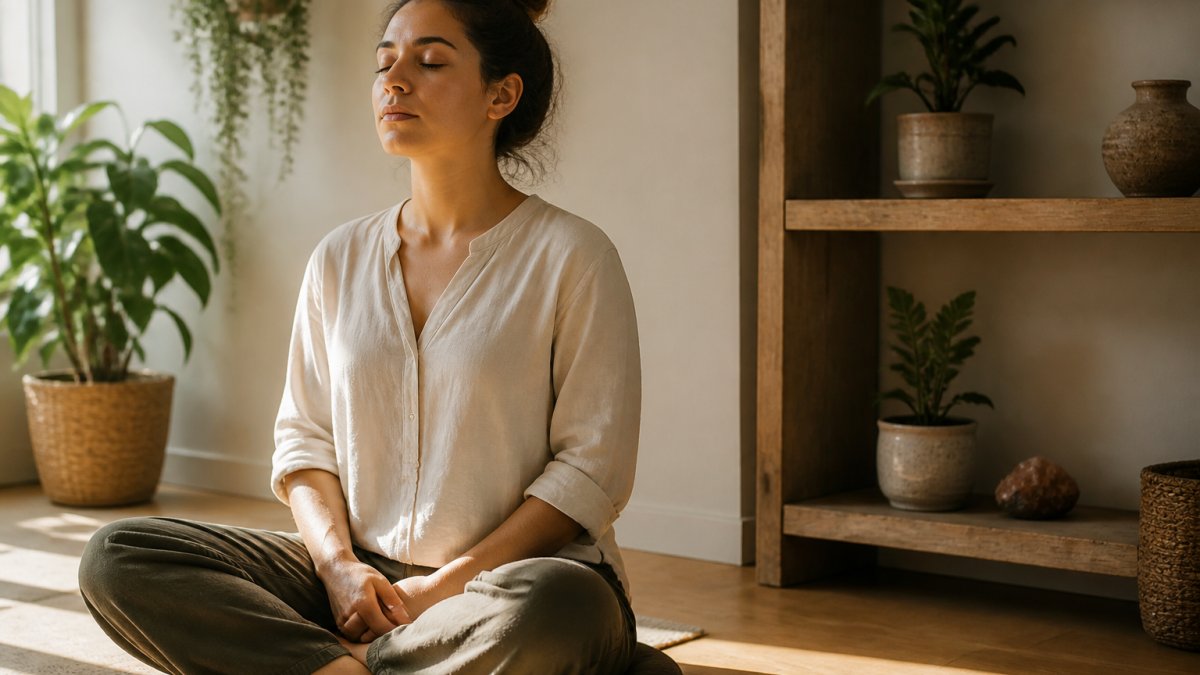
Breathwork and Deep Breathing
Breath is the fastest bridge to your nervous system, unlike your heartbeat, you control it consciously. When you slow your exhale, your parasympathetic nervous system activates.
Slow breathing tells your vagus nerve, which runs from brain to gut and controls your rest-and-digest response, to calm down.
The simplest approach: exhale longer than you inhale. A 4-count inhale and 6-count exhale creates immediate calm, do it for two minutes and notice your shoulders drop, your jaw unclench, your mind quiet.
Grounding and Mindfulness Practices
Grounding anchors you to the present when anxiety pulls you into future fears, using your five senses to remind your body: you are safe right now.
Body awareness is foundational: notice where your body touches the ground or chair, feel the air's temperature, listen to sounds without judgment.
Mindfulness means observing your thoughts without fighting them. When anxiety appears, notice it, acknowledge it, and let it pass, teaching your nervous system that thoughts aren't threats.
Movement and Somatic Release
Your nervous system stores stress in your muscles. Shaking, stretching, and gentle movement release this stored energy.
Walking is underrated: a slow walk outdoors combines movement, fresh air, and nature, even ten minutes shifts your state.
Stretching releases tension, yoga combines movement with breath awareness, dancing or swaying activates your parasympathetic nervous system through rhythm, and humming stimulates your vagus nerve directly.
Nervous System Regulation Exercises You Can Do Daily
Consistency matters more than intensity, five minutes daily beats one hour weekly. But fit matters most: the "best" exercise matches your current state, body, and sensory preferences. A breathing drill that calms one person can make another feel panicky. Use the four exercises below as a menu, not a prescription, and read the safety notes first.
Step 1: The 4-7-8 Breathing Technique
This breathing pattern is simple and powerful, for many people.
How to do it:
- Sit comfortably with your spine straight
- Inhale through your nose for a count of four
- Hold the breath for a count of seven
- Exhale slowly through your mouth for a count of eight
- Repeat four times
When to use it: Before stressful situations, when anxiety rises, or before bed. The extended exhale activates your parasympathetic nervous system, you'll feel the shift within minutes.
Safety adaptation: Breath holds and long exhales can trigger dizziness or panic, especially with a history of panic attacks or trauma. If that happens, skip the hold and try a 4-count inhale and 6-count exhale, or breathe normally and focus on your feet on the floor.
Step 2: Body Scan Meditation
This exercise teaches you to notice tension before it becomes pain.
How to do it:
- Lie on your back in a quiet space
- Close your eyes and bring attention to your toes
- Notice any sensation, tension, warmth, tingling, or numbness
- Slowly move your attention up through your feet, legs, torso, arms, and head
- Spend 10-15 seconds on each body part
- When you reach your head, rest for a moment, then open your eyes
When to use it: Before sleep or when tension builds. This practice teaches your nervous system that you're paying attention to what it needs.
Safety adaptation: For some people, particularly those with trauma histories or sensory sensitivity, closing the eyes and scanning the body can bring up uncomfortable memories or dissociation.
Step 3: Grounding Through the Five Senses
This technique pulls you out of anxiety and into the present moment.
How to do it:
- Name five things you can see around you
- Name four things you can physically feel (texture of your shirt, temperature of air, etc.)
- Name three things you can hear
- Name two things you can smell
- Name one thing you can taste
When to use it: During panic, overwhelm, or when your mind races. Engaging your senses interrupts the anxiety loop, your nervous system can't stay on high alert when focused on sensory details.
Safety adaptation: If smell or taste cues are linked to distressing memories, use only sight, sound, and touch.
Step 4: Gentle Stretching and Walking
Movement releases trapped energy in your body.
Calming the Nervous System: A Spiritual Guide to Healing →
How to do it:
- Stand and gently reach your right arm overhead, leaning slightly to the left
- Hold for 15 seconds, then switch sides
- Roll your shoulders backward slowly, five times
- Gently turn your head side to side, no forcing
- Walk slowly for 5-10 minutes, focusing on each footfall
When to use it: Anytime you feel stuck or tense. Slow, conscious movement is more calming than fast exercise.
Safety adaptation: If you have mobility limitations, do the arm and shoulder movements seated. If walking isn't accessible, try seated marching or gentle swaying while holding a stable surface.
How to Choose the Right Exercise for Your State
Rather than doing all four daily, match the technique to what your nervous system needs right now:
- If you feel wired, panicky, or your heart is racing: Start with the extended-exhale breath (4-6) or five-senses grounding. These are calming and down-regulating.
- If you feel numb, foggy, or shut down: Start with gentle movement or walking. Breathwork alone can feel too still; movement helps re-engage.
- If you feel tense but functional: A body scan or gentle stretching fits well.
A useful rule of thumb: calming practices (long exhales, grounding) suit an over-activated state; activating practices (walking, stretching, humming) suit an under-activated state. If a practice makes you feel worse, that's information, not failure. Switch to a gentler option.
| Exercise | Duration | Best Time | Key Benefit |
|---|---|---|---|
| 4-7-8 Breathing (or 4-6 without hold) | 2-3 minutes | Before stress or bed | Immediate calm activation |
| Body Scan | 10-15 minutes | Before sleep | Body awareness and release |
| Five Senses Grounding | 2-5 minutes | During anxiety | Present-moment focus |
| Gentle Movement | 5-10 minutes | Anytime | Energy release and flexibility |
How Long Does It Take to Regulate Your Nervous System
There's no single answer, nervous systems are individual, but patterns emerge.
Immediate shifts happen within minutes: a few deep breaths calm a racing heart, three minutes of grounding pulls you out of panic.
Deeper changes take weeks and months.
The real timeline depends on how long you've been stressed, how often you practice, and whether you address root causes.
What matters most: start now. Five minutes today builds momentum, consistency beats perfection every time.
Building Your Personal Nervous System Regulation Routine
A routine works because it removes decision-making. But most advice stops at "be consistent." A practical plan needs three things: a realistic daily structure, a way to track progress, and permission to adjust when life gets busy.
A Structured Daily Plan (With Short Options)
Anchor practices to moments you already have. Here's a sample structure:
Morning (2-5 minutes)
- On waking, before checking your phone: three slow breaths with a longer exhale (4-count in, 6-count out).
- Short option: one minute of five-senses grounding while the kettle boils.
- If you feel groggy or shut down: 2 minutes of gentle stretching or a short walk instead of breathwork.
Midday (1-3 minutes)
- A reset between tasks: stand, roll your shoulders, and take five slow breaths.
- Short option: a single 4-6 breath cycle at your desk.
- If you feel wired: step outside for 5 minutes of slow walking.
Evening (5-15 minutes)
- Wind-down: a body scan in bed or gentle stretching before screens off.
- Short option: five-senses grounding lying in bed.
- If body scans feel uncomfortable: listen to calming music or hum softly for a few minutes instead.
Weekly anchor (10-20 minutes, once or twice)
- A longer walk, yoga session, or extended body scan. This is the "top-up," not the foundation.
Total daily time: as little as 5-8 minutes on busy days. Structure matters more than duration, anchoring practices to existing routines makes them stick.
How to Track Progress Without Overthinking It
You don't need an app or clinical scale, simple self-observation is enough. Once a week, rate three things on a 1-5 scale:
- Perceived stress, how tense or overwhelmed you felt overall this week.
- Sleep quality, how easily you fell asleep and how rested you felt.
- Recovery time, how long it took to feel calmer after a stressful moment.
Look for trends over 3-4 weeks, not daily fluctuations. A practice is "working" if these numbers trend helpfully or you use the techniques more automatically. If nothing changes after a month of consistent practice, try a different category (movement instead of breathwork) or consider additional support.
Start With One Practice, Not Five
Pick the technique that appeals most, if you love movement, start with walking; if drawn to breathwork, begin with the 4-6 breath. One practice done daily beats five done sporadically.
Build your routine like this:
- Week 1: Choose one exercise. Practice it daily for five minutes, anchored to an existing habit.
- Week 2: Add a second practice at a different time of day. Keep total time under ten minutes.
- Week 3: Increase to ten minutes if it feels natural, or stay at five. Add the weekly longer session if possible.
Time matters less than consistency, a five-minute daily practice beats a thirty-minute weekly one. Your nervous system responds to regularity.
The IYNI-K guide Calming the Nervous System: A Spiritual Guide to Healing offers daily rituals and reflection prompts for spiritual practice and mindful awareness, helping you build a routine that feeds body and spirit.

When to Seek Professional Support
Self-soothing techniques are powerful, but not a replacement for professional help when you need it.
Therapy works. Mental health research shows that professional support accelerates nervous system healing.
Combine approaches. Use self-soothing techniques daily. See a therapist when needed. Both matter.
Learning to regulate your nervous system naturally is one of the most powerful skills you can build.
Start small. Practice consistently. Notice what shifts.
Frequently Asked Questions
Can breathing exercises help regulate the nervous system?
Yes. Slow, deliberate breathing activates your parasympathetic nervous system, which signals your body to relax. Techniques like the 4-7-8 breathing method (inhale for 4 counts, hold for 7, exhale for 8) or three deep breaths can shift you from stress response to calm within minutes. Consistent breathwork trains your nervous system to recover faster from stress over time.
What are the early signs of an overstimulated nervous system?
Early signs include racing thoughts, shallow breathing, muscle tension, restlessness, difficulty concentrating, and irritability. Physical symptoms may include a rapid heartbeat, digestive discomfort, or feeling on edge. Recognizing these signals early lets you intervene with self-soothing techniques before dysregulation deepens into anxiety or exhaustion.
How long does it take to regulate your nervous system after stress?
Immediate relief from a single breathing or grounding exercise can occur within 2-5 minutes. However, building lasting nervous system resilience through daily practice typically takes 4-8 weeks of consistent effort. The timeline depends on practice frequency, stress levels, and individual factors. Some people notice shifts within days; others benefit from sustained, gradual progress.
When should I seek professional help for nervous system symptoms?
Seek professional support if symptoms persist despite regular self-care practices, if anxiety or panic attacks interfere with daily life, if you have trauma history, or if you experience severe dissociation, chronic pain, or suicidal thoughts. A therapist, somatic practitioner, or medical provider can offer personalized assessment and treatment tailored to your needs.